
Endodontics Congress. XXIV. Dental World – International Dental Exhibition and Congress
/education-service/media/default/49611/e13b1475.jpg)
Shanon Patel
Kursdetails
Dozenten
Veranstaltungsort
Programm
🌟FREE participation in the event for owners of Premium +48 and Premium +36 club access.
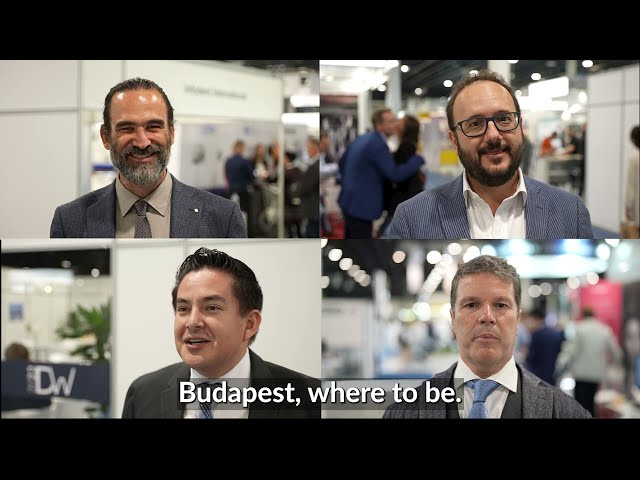
For more than two decades now, the leading players in dentistry have been meeting in Budapest to gain knowledge, experience and expertise.
Congress participants and international experts from 50+ countries from all over the world, with a special focus on the Central-Eastern European countries, will be able to attend 5 international congresses. The presence of more than 300 dental manufacturers will guarantee first-hand experience of all the innovations that will be seen in dental practices in the years to come. In addition, live surgeries, demos, workshops and practical training sessions will provide visitors with knowledge that can be applied immediately, while the social event will help participants to get to know not only Budapest but also each other better.
Keynote speaker – Dr. Shanon Patel.
IMPORTANT: You can also purchase:
– "All access" ticket (all the 5 congresses for 3 days long)
– "VIP" ticket (all the 5 congresses + three-day lunches, soft drinks and VIP parking)
PROGRAM
Thursday, October 10
9.20-9.30
Dr. Gergely Benyőcs
Opening
9.30-11.00
Dr. Mohamad Zaafrany
Management of Retreatment Difficulties
Management of failed root canal treated teeth not always an easy process and sometimes require special modification to the known techniques to overcome difficulties for a successful treatment. Decision making in cases of retreatment is a very important step in management of difficulties so clinician must be able to assess the case difficulty and possible solutions to manage intra canal obstacles either calcification, ledges, separated instruments or perforations. Sometimes modifications to the standard techniques is required to achieve successful treatment.
In the lecture we will cover how to:
- Assess case difficulties in retreatment situations
- Diagnose vertical root fractures and cracks
- Seal lateral root canal perforations
- Manage intracanal calcified blockage
- Establish patency in cases of retreatment for a better prognosis.
11.00-12.30
Dr. Mohamad Zaafrany
The Ultimate Guide for Management of Separated Files
Intracanal instrument separation is an accident that could happen during shaping of root canals. The frequency of such accident increased with increasing the tightness of the canal or increased degree of canal curvature that’s why clinician should be aware of how to prevent that error.
In the lecture we will cover:
- The reasons behind instrument separation and what are the contributing factors to for decision making in management and selection to appropriate techniques.
- How to bypass separated files, the protocol and the needed tools.
- How to do retrieval to separated instruments, the needed tools and different techniques.
- When to consider surgical approaches.
12.30-14.00
Lunch break
14.00-15.30
Dr. Alfredo Iandolo
Minimally Invasive Approach in Modern Endodontics
For several years, minimally invasive Endodontics has been considered as revolutionary and the road to the future of the Endodontics. unfortunately the conservative thinking was limited only to the access cavity. The aim of this lecture is to show the how to perform the phases of: access cavity, shaping, 3D Cleaning, 3D Obturation and MicroEndodontic Surgery in a conservative way and to show how new techniques and protocols can improve using simplified techniques our work and, more importantly, our outcomes.
15.30-17.00
Dr. Bojidar Kafelov
Diagnosis, Preparation for the Endodontic Treatment and the Thinking Process Behind It
In the modern world of dentistry we tend more and more to pay attention to details but we have the tendency to lose sight of the bigger picture. We focus on NiTi systems, root canal filling methods, instrument removal etc but sometimes we tend to forget that we're treating patients and their illnesses. The purpose for my presentation is to show my thinking process before starting the endodontic treatment, the diagnostic process, the patient communication and the preparation stages before entering the root canal system.
Friday, October 11
9.20-9.30
Dr. Gergely Benyőcs
Opening
9.30-11.00
Dr. Shanon Patel
Improving Endodontics Outcomes – Back to Basics
The aim of this presentation:
- revisit the different criteria of assessing outcome; success versus survival
- give an overview on what impacts Endodontics success rates
- discuss novel clinical research which demonstrates how success rates in Endodontics can be predictably improved.
11.00-12.30
Dr. Shanon Patel
Improving Endodontics Outcomes – Improving the Longevity of Teeth
The aim of this presentation:
- give an overview of the ’traditional’ reasons why endodontically treated teeth are extracted
- discuss novel, clinical research which clearly demonstrates a shift in the reasons why endodontically treated teeth are extracted
- discuss SIMPLE strategies to improve the survival of endodontically treated teeth.
14.00-15.30
Dr. Krzysztof Gonczowski
Pain and Stress Free Dentistry – Is It Possible?
Local anesthesia has always been a challenging dental procedure for both dentists and patients due to several factors, including the selection of the right molecule for each clinical situation, administration techniques, medical complications, and proper dosages for patients with special health conditions. The course aims to provide practical guidance to dentists on stress and pain management for dental patients. It covers the principles behind selecting the right type and dosage of local anesthetic for different patient groups, along with clinical procedures for pain-free and effective local anesthetic injections (clinical pictures, mid- operation video recordings, and 3D animations).
The following topics will be discussed during the lectures:
1. Selection of the appropriate local anaesthetic agent, depending on the clinical situation (age, health status of the patient and planned surgery). When to use articaine, lidocaine, mepivacaine or bupivacaine?
2. Administration of local anaesthesia to pregnant women, children, elderly people and patients with systemic diseases
3. Safe and simple calculation of the maximum dosage of local anaesthetics
4. What are the causes of pain during local anesthesia?
5. Pain transmission in the human body and methods of its modification.
6. Atraumatic Injection Technique – how to perform local anesthesia injections in an effective and painless way?
7. Overview of practical and effective techniques for pain elimination during needle insertion.
8. Practical application of iatrosedation in dentistry to reduce pain and stress in patients related to the administration of local anesthesia.
15.30-17.00
Dr. Alfredo Iandolo
Minimally Invasive Approach in Modern Endodontics
For several years, minimally invasive Endodontics has been considered as revolutionary and the road to the future of the Endodontics. unfortunately the conservative thinking was limited only to the access cavity. The aim of this lecture is to show the how to perform the phases of: access cavity, shaping, 3D Cleaning, 3D Obturation and MicroEndodontic Surgery in a conservative way and to show how new techniques and protocols can improve using simplified techniques our work and, more importantly, our outcomes.
Saturday, October 12
9.20-9.30
Dr. Gergely Benyőcs
Opening
9.30-11.00
Dr. Emmanuel João Nogueira Leal da Silva
Mapping the Present and Future of Minimally Invasive Endodontics
In the last decades, the move of medicine towards minimally invasive treatments is notorious and scientifically grounded. As dentistry naturally follows in its footsteps, minimal access and root canal preparation have also become a trend topic in the endodontic field. These procedures aim to maximize preservation of dentine tissue backed up by the idea that this is an effective way to reduce the incidence of post-treatment tooth fracture.
Despite the passionate way that some defend that traditional access cavity ad root canal preparation decreases the resistance of teeth to fracture, the current literature is mainly composed by a limited number of studies, mainly laboratory ones, with contradictory results, which means low-quality evidence to shape and guide the clinical decision-making process. Moreover, it is inevitable that a clinical approach such as minimal endodontic access cavities that demands complex tools and skilled and experienced operators bring to the fore doubts on its educational impact mainly when confronted with the conflicting scientific output, ultimately provoking a cost-benefit analysis of its implementation as a routine technique.
Considering the as yet unclear situation of the minimal invasive approached and rationales proposed to render an endodontically treated tooth predictably functional the present lecture aims to discuss the ongoing scientific and clinical status of minimally invasive access cavities and root canal preparation aiming to input an in-depth and unbiased view over the rationale behind them, uncovering not only the related conceptual and scientific flaws but also outlining future directions for research and clinical practices.
11.00-12.30
Dr. Emmanuel João Nogueira Leal da Silva
Shaping for Cleaning the Root Canals: A Clinical-Based Strategy
With the emergence of nickel-titanium rotary systems in the early 2000s, a new challenge surfaced for Schilder's concept. A distinct disparity became evident between the rapid preparation facilitated by these high-speed mechanical systems and the effective control of infection. While the accelerated shaping undeniably marked a technical advance, making canal shaping easier and safer, it necessitates a reevaluation of the Cleaning & Shaping paradigm.
The intrinsic need for time in accomplishing cleaning and disinfection conflicts with the swift pace of overfast shaping, contrary to Schilder's original theory. Thus, the concept of "Shaping for Cleaning" aligns seamlessly with the contemporary standard of root canal preparation. This shift is not merely a semantic change but a deliberate effort to guide clinicians in optimizing specific measures for thorough disinfection post-canal shaping. To distill the essence of "Shaping for Cleaning", this lecture explores the recent evolution of root canal preparation.
It offers a comprehensive examination of the impact of technological advancements on each phase of root canal treatment. Grounded in the latest scientific evidence, the lecture provides a meticulous examination of current limitations in achieving disinfection in Endodontics. The goal is to equip clinicians with insights for a more effective and informed approach to root canal treatment.
12.30-14.00
Lunch break
14.00-15.00
Dr. Dina Abdellatif
Endodontic Diagnosis and How to Assess the Vitality of the Pulp
Successful Endodontic treatment depends on many factors and steps. The first and most important step is establishing a correct diagnosis since the treatment plan solely depends on diagnosis. The correct diagnosis is reached through clinical examination and radiographic evaluation. The ideal tests should be objective, painless, and reliable in determining the pulp vitality. A perfect diagnostic test would always be positive in the presence of disease and negative in the absence of disease. Vitality implies that a blood supply is present within the tissues. Hence, only a test that measures or assesses pulpal blood flow can be called a vitality test. Reaching Endodontic final diagnosis should be made based on several factors. Relying only on one test can lead to inaccurate or unnecessary dental treatment. That's why hearing the patient's complaint and investigating this complaint, along with the diagnostic tests and radiographic examination, should be performed before reaching the final diagnosis.
Endodontie
Treatment methods
Pathologies
Dozenten 1
/education-service/media/default/49611/e13b1475.jpg)
Professor für Endodontologie am King's College London Dental Institute (KCL), der größten zahnmedizinischen Schule Europas. Consultant Endodontist am Guy's & St Thomas' NHS Foundation Trust, London. Spezialist für Endodontie mit Praxis beschränkt auf komplexe Wurzelkanalbehandlung, endodontische Mikrochirurgie, Management dentaler Traumata und orofazialer Schmerzen.
Über 20 Jahre spezialisierte klinische Erfahrung in der Behandlung komplexer endodontischer Fälle einschließlich Wurzelresorption, Perforationen, Revisionen und traumatischer Zahnverletzungen. Experte für Cone-Beam-Computertomographie (CBCT) Anwendungen für endodontische Diagnose und Behandlungsplanung. International anerkannt für hochrangige Forschung zu Behandlungsergebnissen, externer zervikaler Resorption und 3D-Bildgebung in der Endodontie.
Hauptautor mehrerer Positionspapiere der European Society of Endodontology (ESE) einschließlich CBCT-Leitlinien (2014, 2019), Externe Zervikale Resorption (2018) und Wurzelresorption (2023), die evidenzbasierte Orientierung für Kliniker in Europa und weltweit bieten. Autor von über 100 begutachteten Publikationen in führenden zahnmedizinischen Zeitschriften. Betreuer von über 70 Master- und PhD-Forschungsprojekten am KCL und eingeladener Betreuer an führenden akademischen Institutionen in Europa und den USA. Internationaler Hauptredner bei über 150 Konferenzen auf fünf Kontinenten. Co-Autor von vier Lehrbüchern über Endodontie, übersetzt in fünf Sprachen einschließlich Chinesisch.
BDS vom King's College London. MSc in Conservative Dentistry vom Eastman Dental Institute, University College London. MClinDent in Endodontie vom Eastman Dental Institute. MRD (Membership in Restorative Dentistry) vom Royal College of Surgeons. PhD vom King's College London. FDS (Fellowship in Dental Surgery) vom Royal College of Surgeons of England. FHEA (Fellow of the Higher Education Academy). GDC Registered Specialist in Endodontics.
Veranstaltungsort
/education-service/media/default/59664/9f7e0631.jpg "Venue location")
Hungexpo Fair Center
Albertirsai út 10, 1101, Budapest, Hungary
Veranstalter

Event Organizer Hungary Kft
Wenige Stimmen